
Evapotranspiration & Water Use Efficiency
Evapotranspiration
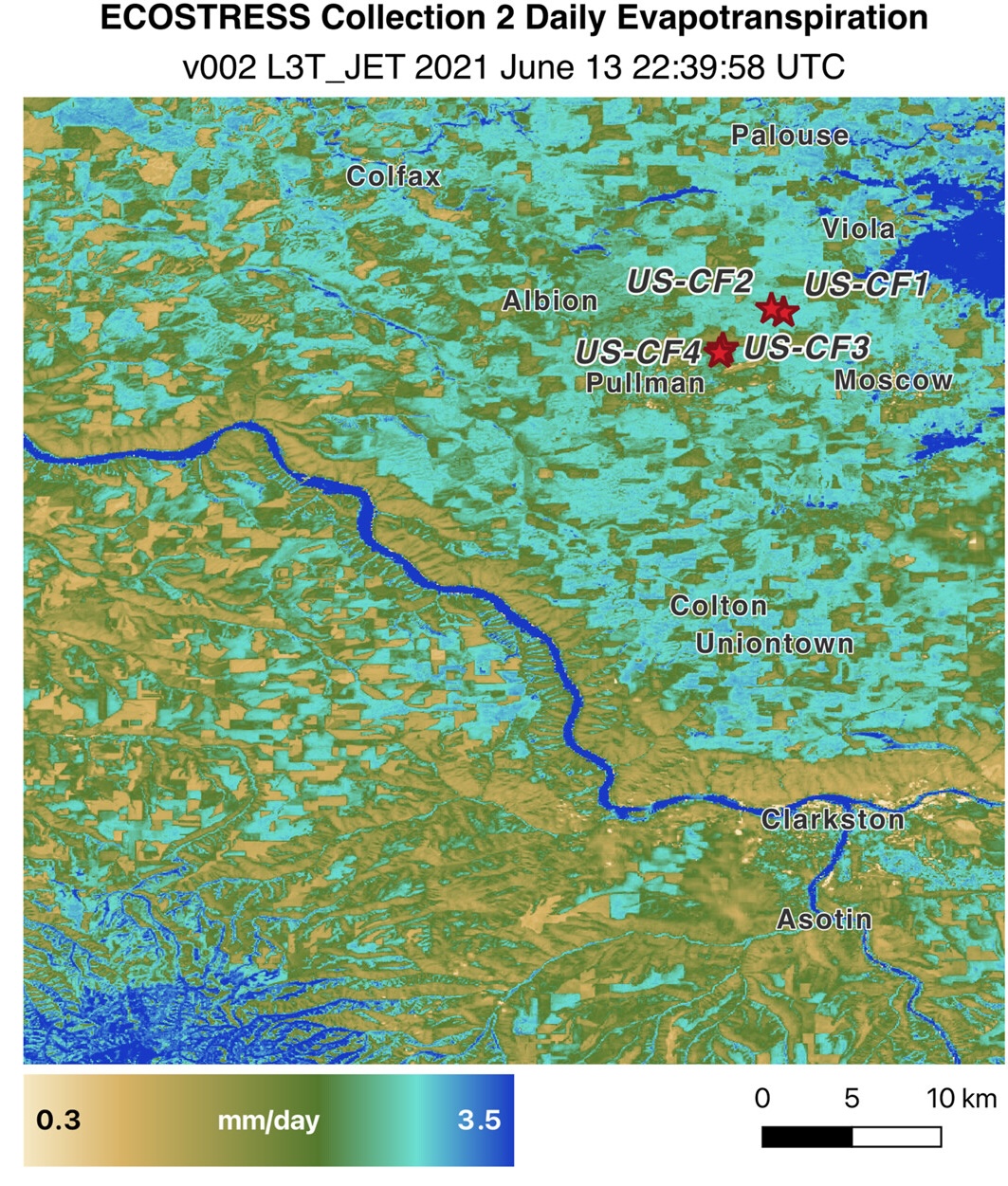
Evapotranspiration (ET) is the combined process of water evaporation from soil and surface water bodies, and transpiration through plant stomata. ET is important for understanding the water cycle, which impacts water security and vegetation health. ET products derived from remote sensing observations can help with conservation, fire risk assessment, water management, and agricultural practices (among other things). The PIE lab works closely with NASA's ECOSTRESS mission, which measures thermal infrared radiation (TIR) and uses it to map ET from space.
Water use efficiency
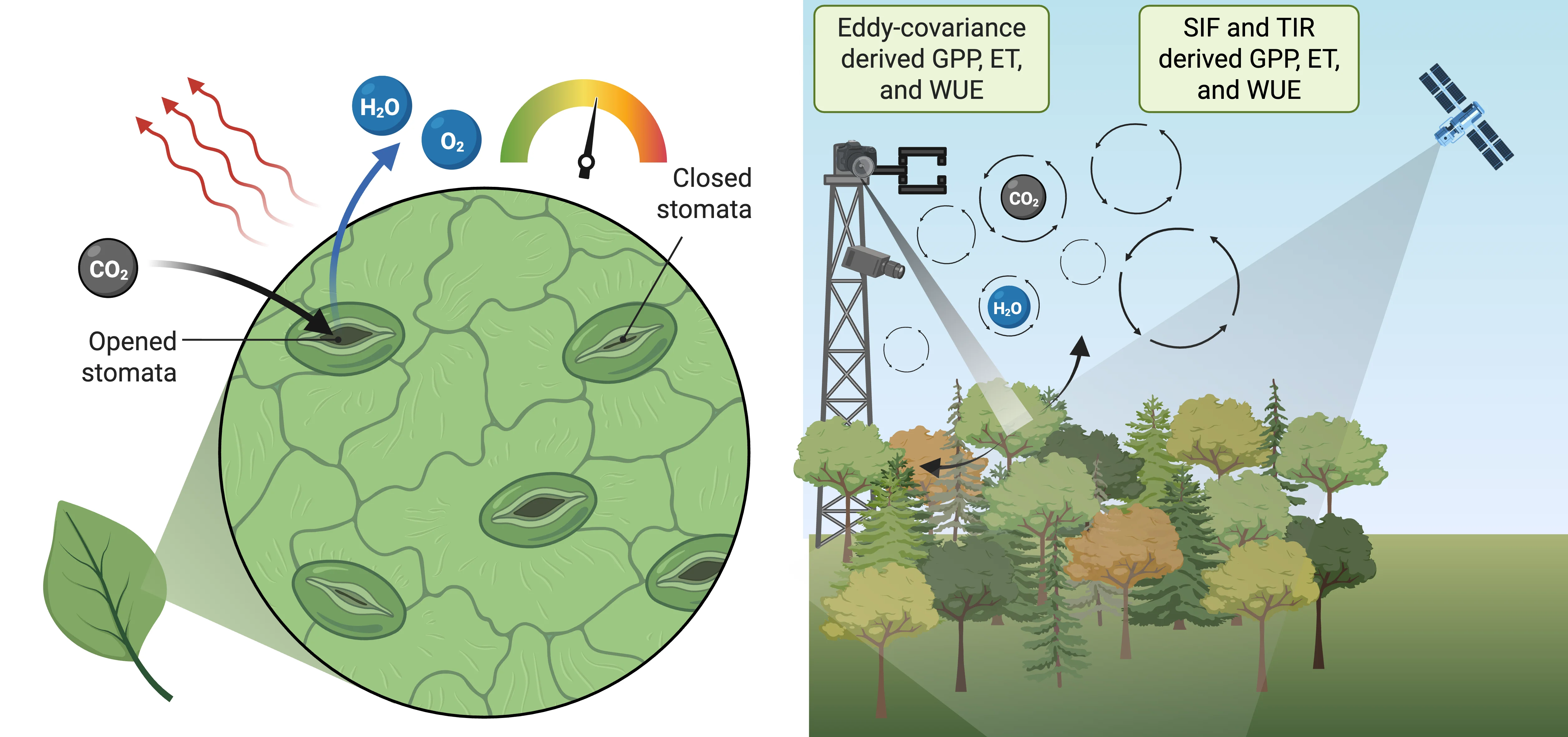
The relationship between ecosystem carbon gain (gross primary production; GPP) and water loss (ET), also known as water use efficiency (WUE), is a key variable that can help us better understand and constrain the response of ecosystems to changes in climate. Combining solar-induced chlorophyll fluorescence (SIF) and TIR-derived ET has potential to constrain the highly dynamic nature of WUE across space and time and yield critical insights into global carbon and water cycles. The PIE lab explores the connections between remotely sensed SIF and TIR and WUE across scales.
Related Publications
- Pierrat, Z. A., Purdy, A. J., Halverson, G., Fisher, J. B., Mallick, K., Pascolini-Campbell, M., Ryu, Y., Anderson, M. C., Villanueva-Weeks, C., Johnson, M. C., Hatch, B., Davis, E., Yang, Y., & Cawse-Nicholson, K., 2025. Evaluation of ECOSTRESS Collection 2 Evapotranspiration Products: Strengths and Uncertainties for Evapotranspiration Modeling. Water Resources Research, 61(6), e2024WR039404. doi.org/10.1029/2024WR039404
Preprint: doi.org/10.22541/essoar.173193420.03623709/v1 - Pierrat, Z. A., Gustine, R.N., Boser, A., Ruehr, S., Lee, C.M., Reager, J.T., Cawse-Nicholson, K., 2026. Human contributions to evapotranspiration mitigate swings in dry-to-wet year transitions. Communications Sustainability. 1, 8. doi.org/10.1038/s44458-025-00002-w
Related Datasets
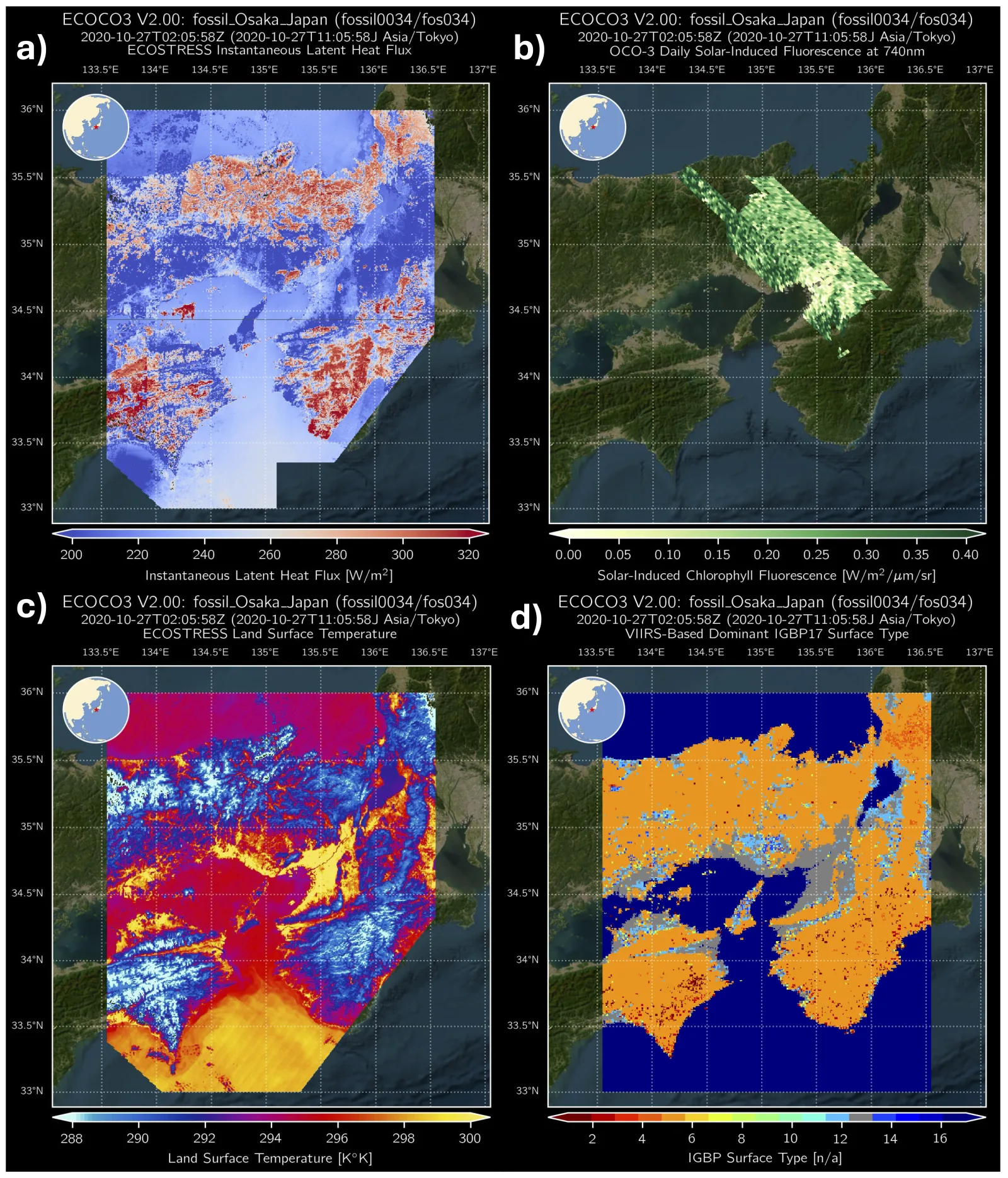
Kurosu, T. P., Chatterjee, A., Cawse-Nicholson, K., Pierrat, Z. A., & Hook, S. J. (2025). ECOSTRESS/OCO-3 Co-Located Observations V1.0. Greenbelt, MD, USA, Goddard Earth Sciences Data and Information Services Center (GES DISC). doi.org/10.5067/JY21I1T22RCA