Blog
Updates from the PIE Lab.
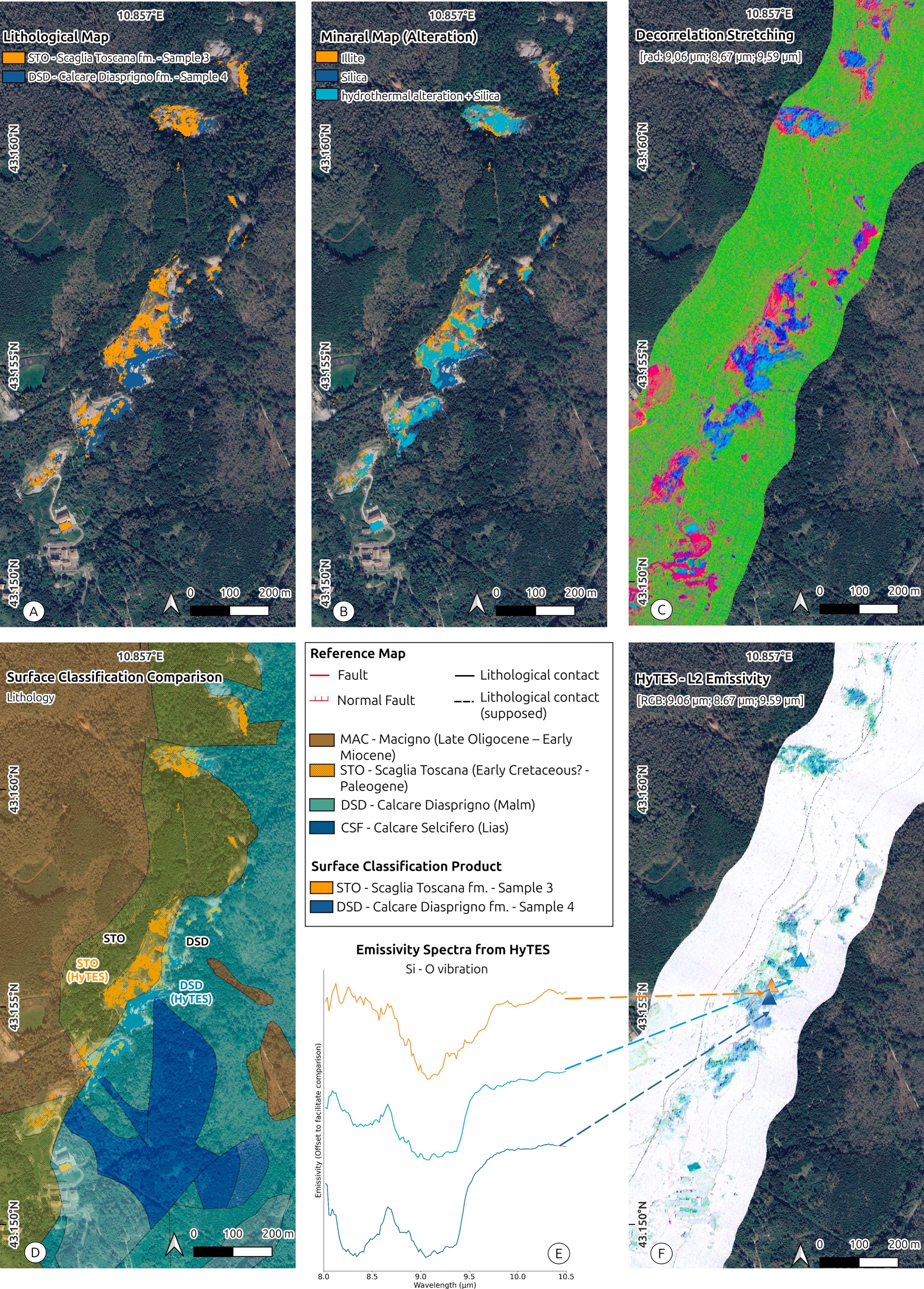
New Paper: Mapping Lithology and Mineral Alteration with Thermal Infrared Spectroscopy
A new paper co-authored by Dr. Pierrat in the International Journal of Applied Earth Observation and Geoinformation uses thermal infrared spectroscopy to map rock types and hydrothermal alteration in geothermally active areas.
Read more →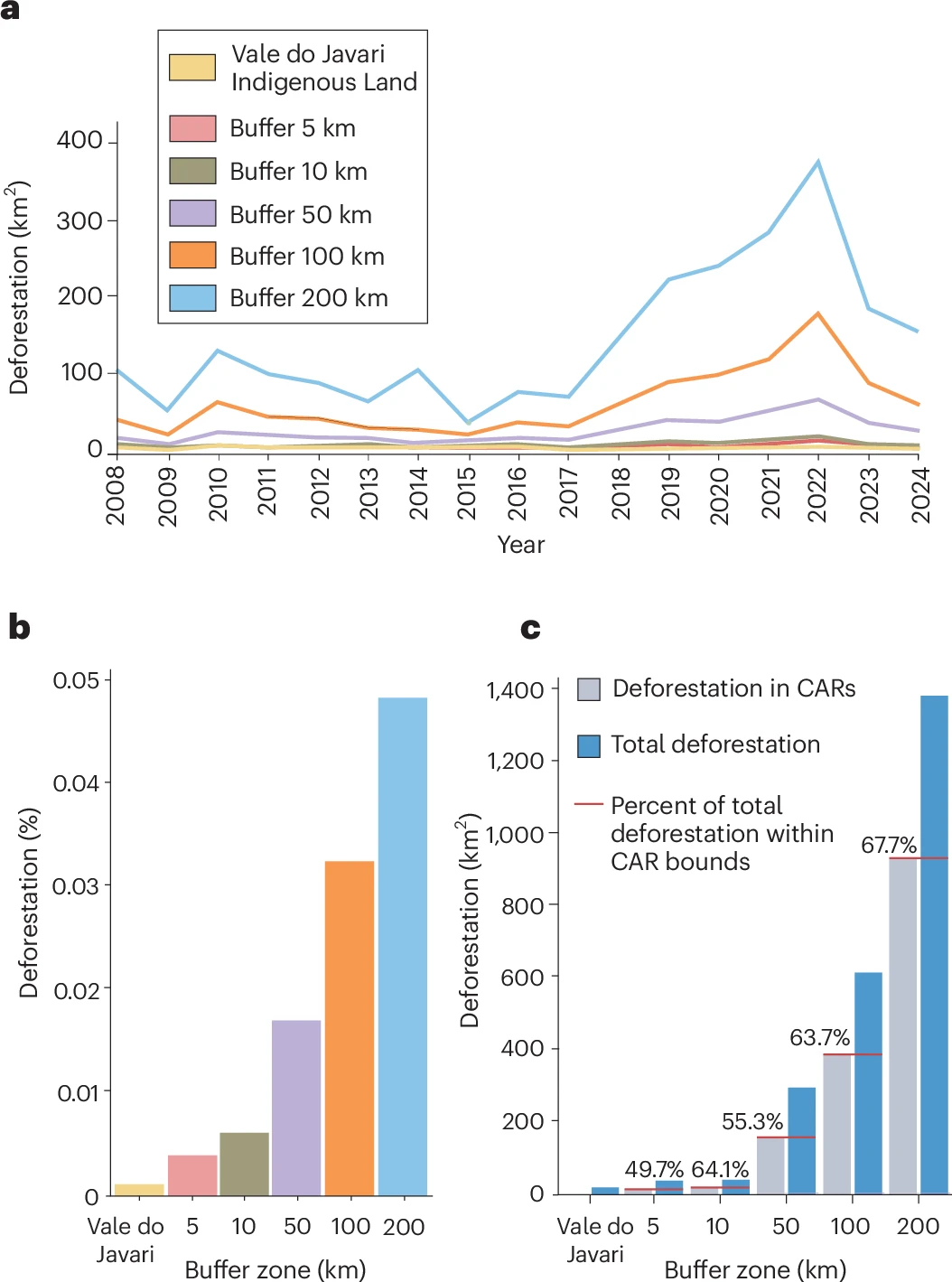
New Paper: Spiralling Frontier Threats in Indigenous Amazonia
A new paper co-authored by Dr. Pierrat in Nature Sustainability documents accelerating socio-environmental threats closing in on Indigenous Lands in the Brazilian Amazon.
Read more →
New Paper: Decoupled Carbon Assimilation and Growth in Oaks
A new paper co-authored by Dr. Pierrat in Science Advances shows oak photosynthesis and wood growth are decoupled across the season, with implications for forest carbon models.
Read more →
New Paper: Harnessing Solar-Induced Fluorescence for On-Farm Agriculture
A new paper co-authored by Dr. Pierrat reviews recent advances and outstanding needs for using SIF in on-farm agricultural research and management.
Read more →
PIE Lab is Hiring a Postdoctoral Scholar!
The Dept of Geography, UCSB is excited to announce the opening of a Postdoc Scholar in the PIE lab.
Read more →
New Research Out Now on Human Impacts to the Water Cycle in California!
California’s swing from extreme drought to record-breaking rain didn’t reset the water cycle the way we might expect — because humans are a major driver of it.
Read more →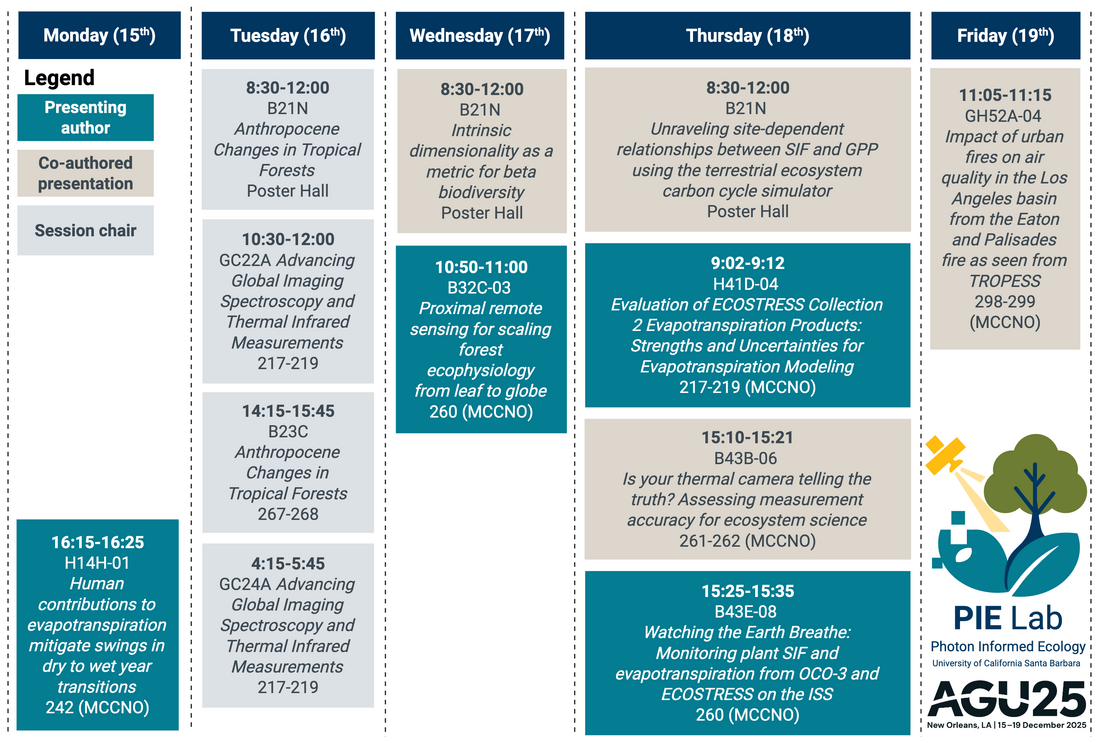
AGU Schedule
Going to AGU? Come find us at any of the following events — presenting our own work and filling in for JPL colleagues.
Read more →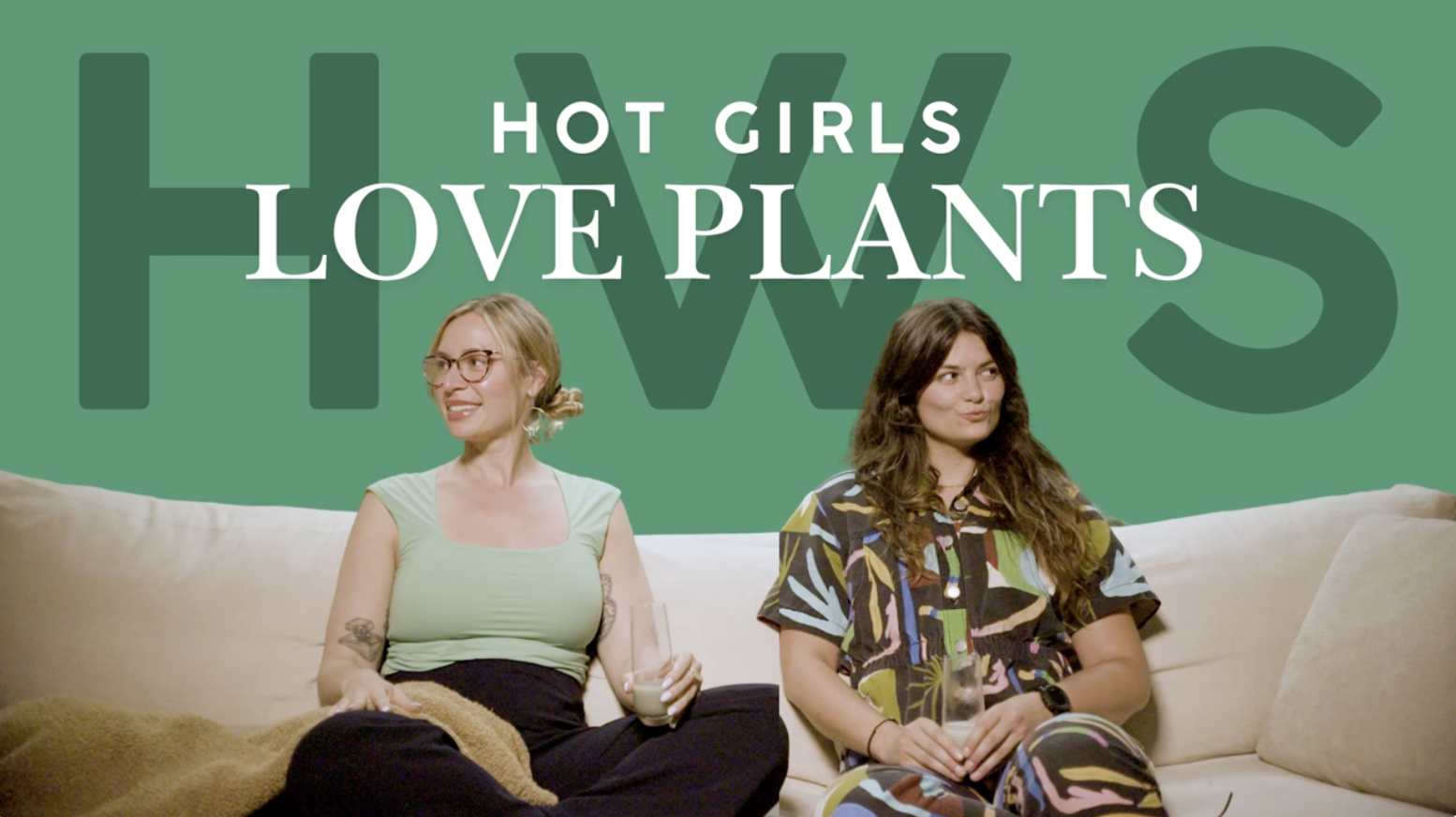
Guest on Hotter Weirder Smarter Podcast!
Dr. Pierrat chats with Dr. Ruby Patterson about plants, fieldwork, imposter syndrome, and finding community.
Read more →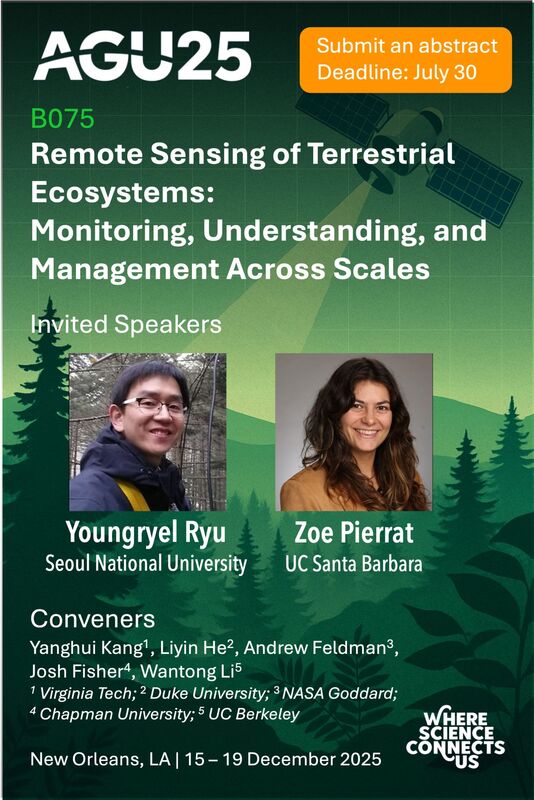
Speaking at AGU!
Dr. Pierrat's talk, “Proximal remote sensing for scaling forest ecophysiology from leaf to globe,” at AGU in New Orleans.
Read more →
Welcome to the Photon Informed Ecology Lab!
The PIE Lab at UCSB combines remote sensing and data science to understand terrestrial ecosystems in a changing climate.
Read more →