Research Overview
See the following sites for publications and research updates.
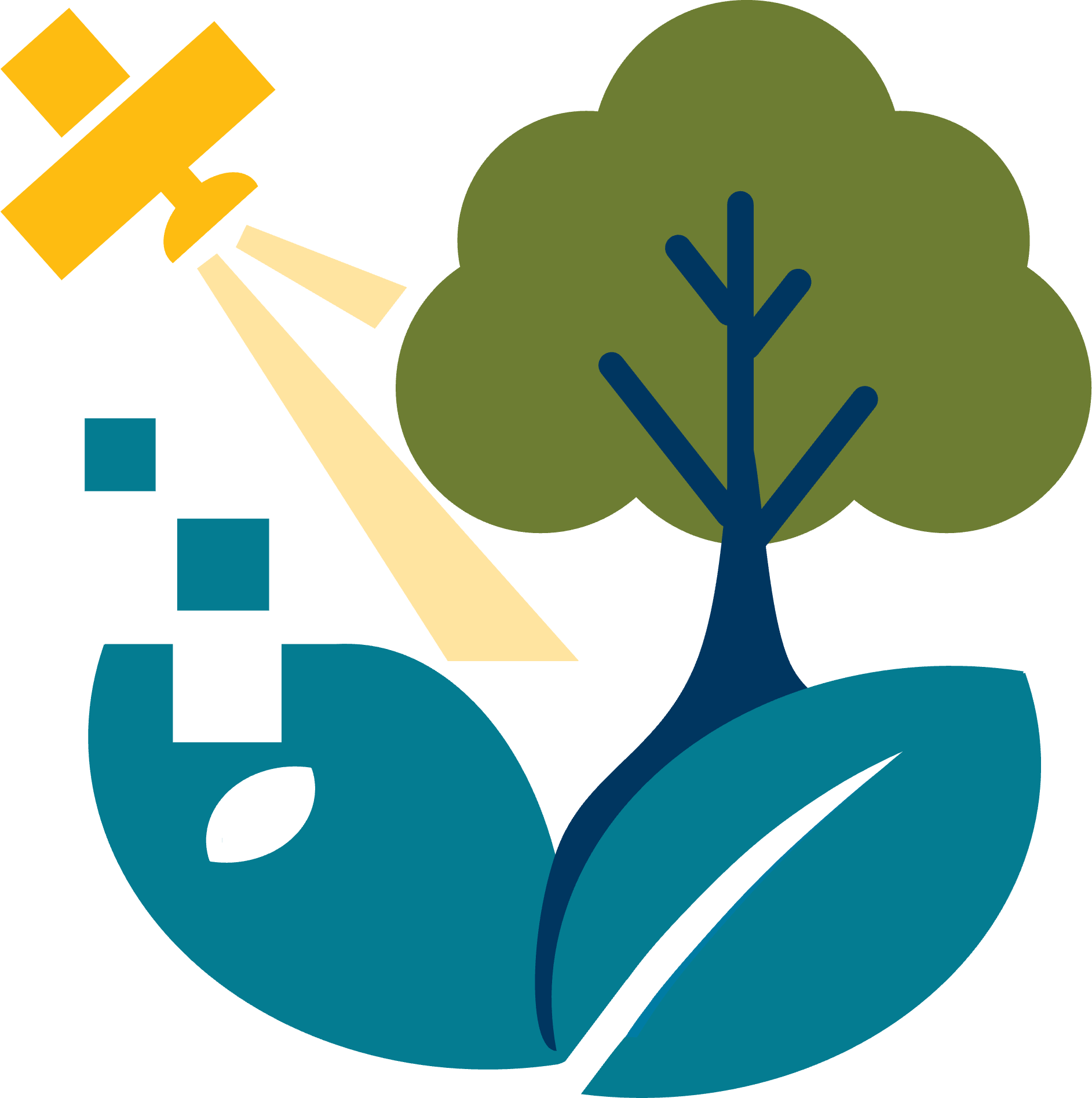
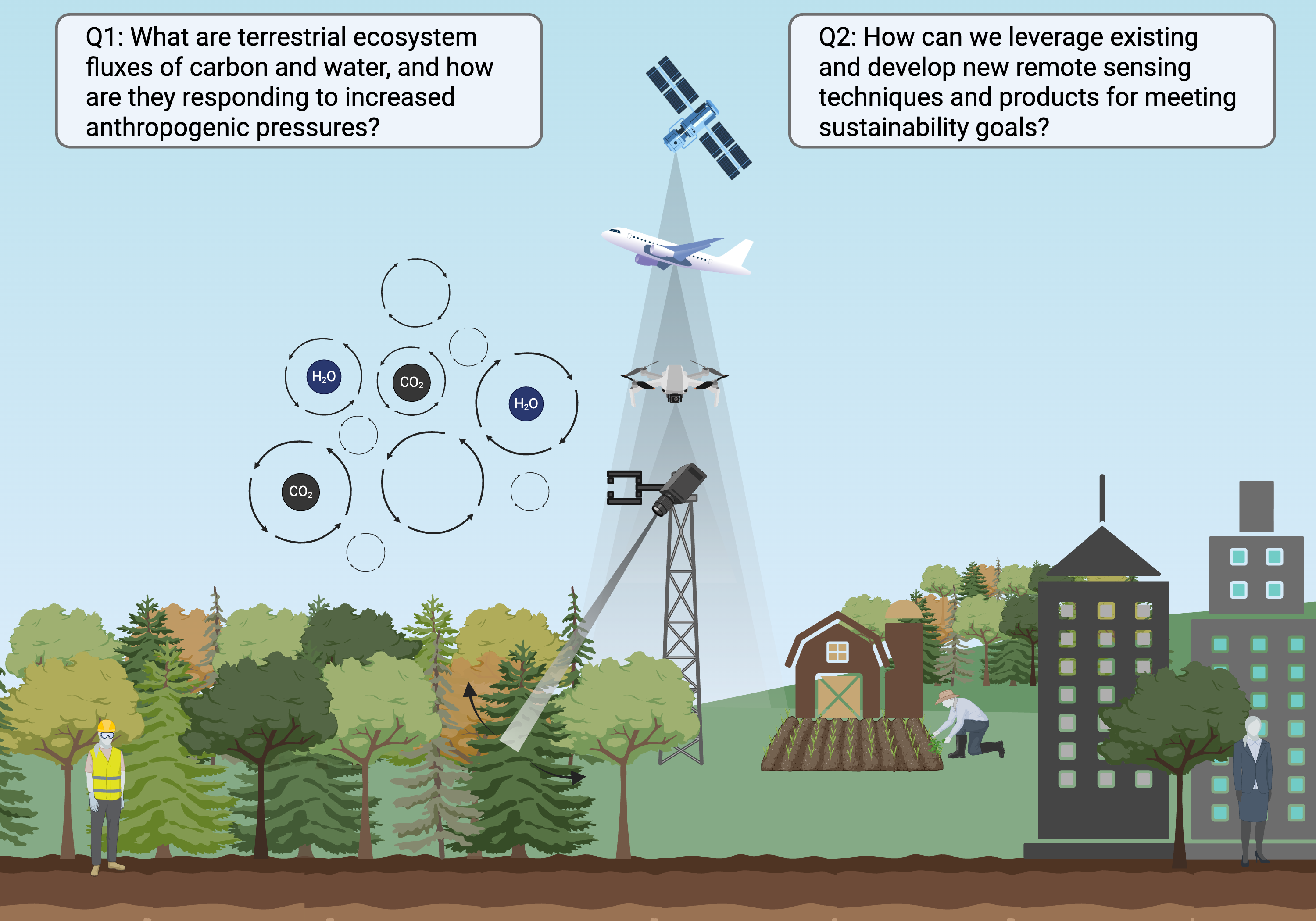
The PIE lab is focused on using remote sensing for understanding plant’s role in the carbon and water cycles and building a more sustainable future. We do this by linking observed remote sensing metrics to their physical and biological drivers across scales (leaf to globe). In doing so, our research helps quantify carbon and water fluxes, understand environmental stresses on terrestrial ecosystems, and use these findings to plan for the future in a changing climate system.
Research themes
Remote sensing of photosynthesis
Detecting changes in photosynthesis when changes in structure are decoupled from changes in function.
Learn more →Evapotranspiration & water use efficiency
Building and interpreting ET and WUE products to support conservation, fire risk assessment, and water management.
Learn more →Proximal remote sensing
Bridging the gap between leaf and plant-scale observations, flux towers, and air- and spaceborne remote sensing.
Learn more →PIE lab research has been funded by